A patio is mostly a floor. It sits under everything else — the grill, the lounge chairs, the dog bowl, the kids' chalk drawings — and it decides how the whole space feels underfoot on a hot afternoon. Three surfaces cover most of the market: pavers, poured concrete, and composite decking. They look different, they cost different amounts, and they ask for different things from you over the next twenty years. Here is how they compare on the four questions that matter most.
Upfront Cost: Where the Money Actually Goes
A price per square foot is the fastest way to compare bids and the fastest way to make a bad decision. The number on the estimate covers very different amounts of work depending on the material.
Pavers
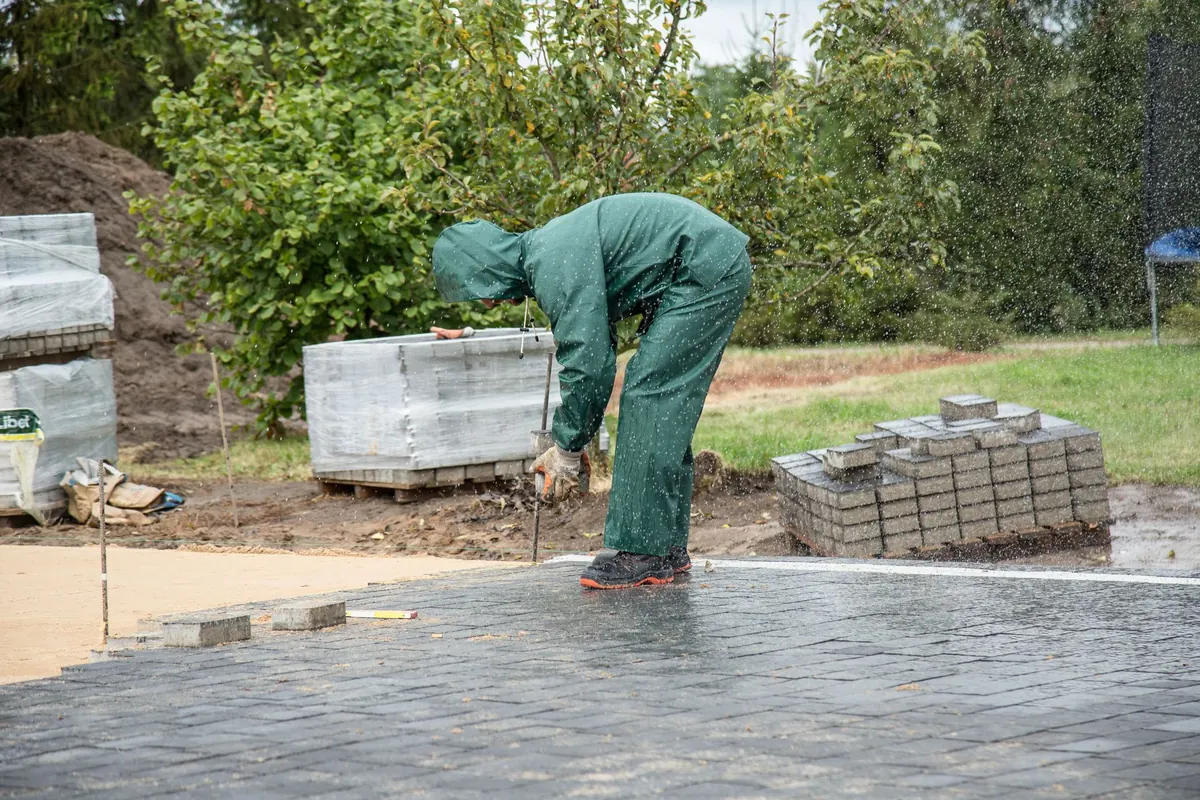
You are paying for two things: the units and the base under them. A proper installation means excavating several inches of soil, compacting crushed stone in lifts, screeding a bedding layer, cutting edge restraints, and sweeping joint sand in at the end. Labor is the bulk of the invoice. Simple running-bond patterns in a rectangular space cost the least; herringbone, curves, and border courses add time, and time is money.
Concrete
A plain broom-finished slab is usually the lowest headline price for a simple rectangle. Forms, reinforcement, grading, and finishing are all baked into the number. The moment you ask for stamped, exposed aggregate, or a colored finish, expect the price to climb toward paver territory — sometimes past it, because decorative concrete takes skilled finishers and often a sealer.
Composite Decking
Composite is priced per board, but the boards are rarely the expensive part. Framing, footings, fasteners, fascia, and railing often account for close to half the job, and that structure is the piece homeowners forget when comparing quotes. Composite can be laid on grade with specialized systems, but most installations are elevated, and elevated means a permit, piers, and stairs.
Whichever direction you lean, ask your contractor to itemize these:
- Site access, demolition, and hauling away the old surface
- Base depth, soil conditions, and how drainage will be handled
- Permit fees and inspections
- Steps, railing, edging, and any lighting or irrigation lines that must move
- Any sealing, finishing, or sanding done after the surface is installed
Get at least two itemized bids, and ask each contractor what happens to the price if the soil turns out to be softer or wetter than expected. That one question separates the pros from the optimists.
Maintenance: The Yearly Reality
All three are low-maintenance compared with a wood deck that needs staining. Low is not the same as none, though, and the work looks different for each.
Pavers
Weeds and moss find the joints. Plan on topping up polymeric sand every few years, pulling the occasional volunteer, and re-leveling a unit that has settled after a hard winter. Sealing is optional — it deepens color and slows staining but is not required for structural life. Wash with a gentle nozzle rather than a pressure washer turned up to strip paint.
Concrete
A well-built slab asks for very little. Resealing every few years keeps it from absorbing oil and leaf tannin. Hairline cracks are normal and mostly cosmetic; wider cracks mean the base moved. In cold climates, avoid piling de-icing salt on a new slab, since repeated freeze-thaw cycles and salt can pit the surface.
Composite
Soap, water, and a soft brush handle almost everything. No sealing, no staining, no splinters. Two caveats: shaded boards can grow mildew and need a periodic cleaning, and grease from a grill or a dropped burger can leave a mark on some boards if you let it sit. Scratches show more on darker, capped boards than on lighter, variegated ones.
Material choice matters less than what happens underneath it. Nine out of ten failed patios were doomed by bad base prep and bad drainage, not by the surface on top.
Heat Retention: The Barefoot Test
Surface temperature is driven by color, texture, sun exposure, and how much mass the material holds. Light-colored pavers and light concrete stay noticeably cooler than dark ones, because pale surfaces reflect more of the sun's energy. Composite decking, particularly in dark colors under full afternoon sun, can get genuinely hot — hot enough that bare feet and dog paws object. Traditional wood decking stays cooler than composite for the same reason it is less dense and holds less heat.
You can usually solve this without changing materials. Choose a lighter tone, add a shade sail or pergola over the sunniest zone, or lay a mat where people step out of the pool. If you plan to use the patio barefoot every evening, walk a sample of each material in the afternoon before you commit.
Lifespan: What Twenty Years Looks Like
Concrete slabs that were poured over a proper base and graded away from the house commonly last thirty years or more, with cracks and color shifts along the way. Pavers can last just as long or longer because damage is localized: lift the sunken units, re-screed the bedding, re-sand, and the patio looks new again. Composite boards typically carry long manufacturer warranties, and real-world service life in the range of a couple of decades is a reasonable expectation, with fading and scratching as the main complaints. A wood deck, for comparison, usually needs refinishing every few years and replacement boards much sooner.
Matching the Surface to Your Yard
- Choose concrete if you want a seamless, simple rectangle, minimal upkeep, and the lowest cost for a straightforward site.
- Choose pavers if you want texture and design flexibility, expect tree roots or freeze-thaw movement, or want the option to repair one square rather than replace the whole floor.
- Choose composite if your site is sloped or elevated, if you want to sit above grade, or if barefoot comfort and zero refinishing matter more than upfront price.
How to Decide Without Regret
Visit a finished patio in each material, ideally a few years old, and look at it after rain and again at four in the afternoon. Ask the installer to explain the base in detail and to write the scope down. Confirm the details that vary by municipality and neighborhood: permits, setbacks, and any HOA rules about hard surfaces, drainage, or color. Then build in a small repair fund, because every surface eventually needs one.
Pick the material that fits your site and your habits, not the one with the best photo. A modest concrete slab graded correctly will outperform a beautiful paver patio built on clay and hope — and a patio you barely think about is the one you will enjoy the most.
Photo: Marianna Zuzanna / Pexels